Applications, Types, and Key Considerations When Replacing Filter Inserts
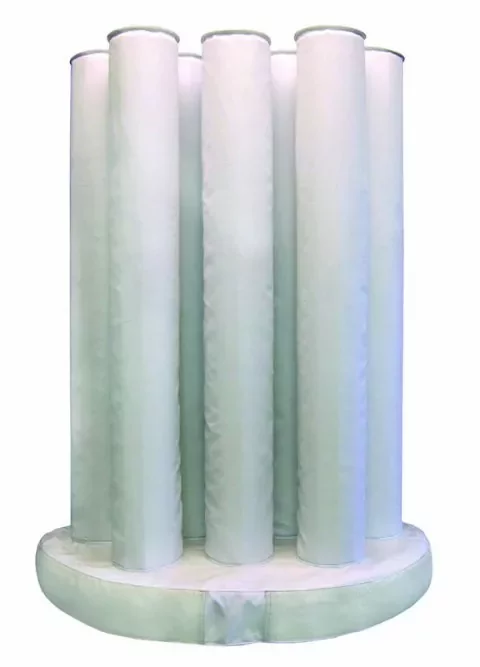
Fluid bed dryers are widely used industrial drying systems employed across various sectors to remove moisture from materials. Here, we look at the basics, their applications, the different types, and the key considerations when replacing these filter inserts.
What Are Fluid Bed Dryers?
These are drying systems based on the principle of fluidization. They use a flow medium, often air or an inert gas, to bring moist materials into a suspended state. This suspended material forms a fluidized bed, in which an intensive exchange of heat takes place between the drying gas and the moist particles. This enables fast and uniform drying.
Applications
They are used across a wide range of industries, including:
1. Pharmaceutical industry: drying active pharmaceutical ingredients, granules, and tablets.
2. Food industry: drying food powders such as milk powder or coffee.
3. Chemical industry: drying chemical products, polymers, and plastic granules.
4. Environmental engineering: drying sewage sludge and waste.
5. Agriculture: drying animal feed and fertilizers.
Types and Variants of Fluid Bed Dryers (FBD)
There are several types and variants, including:
1. Batch FBD: These are dryers in which the material is dried in batches before a new batch is added.
2. Continuous FBD: These allow continuous drying of the material, making them suitable for high-volume production.
3. Round-vessel FBD: This is a design in which the material is dried in a cylindrical vessel with a central air distribution system.
Key Considerations When Replacing Filter Inserts
When replacing them, it is important to consider the following aspects:
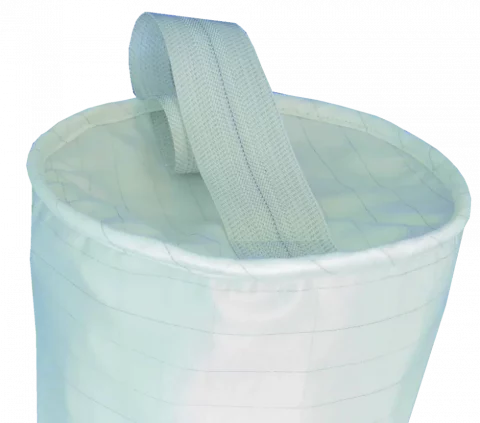
1. Material compatibility: Make sure the new filter insert is made of a material that withstands the product being dried as well as the process temperature — for example, through particularly resistant fabrics for aggressive media or high temperatures.
2. Filtration performance: Compare the filtration performance of the new filter insert with the previous one to ensure it meets the requirements of your production.
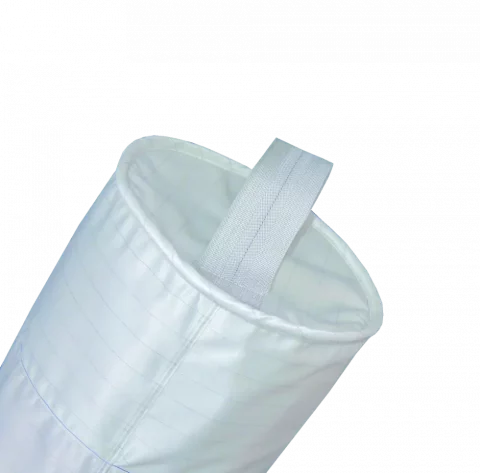
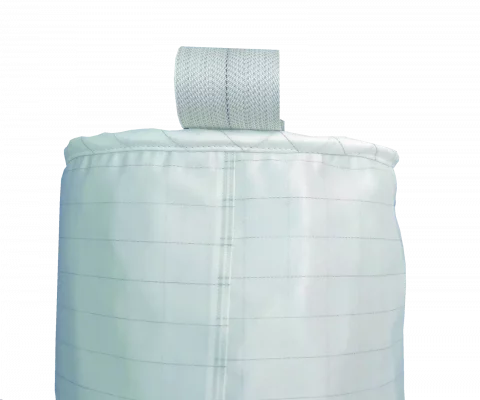
3. Fit and installation: Make sure the filter insert fits your dryer type precisely and can be installed or replaced easily and quickly.
4. Energy efficiency: Low air resistance of the filter medium reduces the pressure drop and, in turn, energy and compressed air consumption.
5. Availability and service: Make sure your supplier offers replacement filter inserts and reliable service to minimize downtime.
Filter inserts are a key component for the efficient and safe operation of fluid bed dryers across various industries. When replacing them, it is essential to consider the specific requirements of your application and ensure that the new filter insert meets your needs in terms of material compatibility, filtration performance, fit, energy efficiency, and availability. This ensures your production process runs smoothly and cost-effectively.